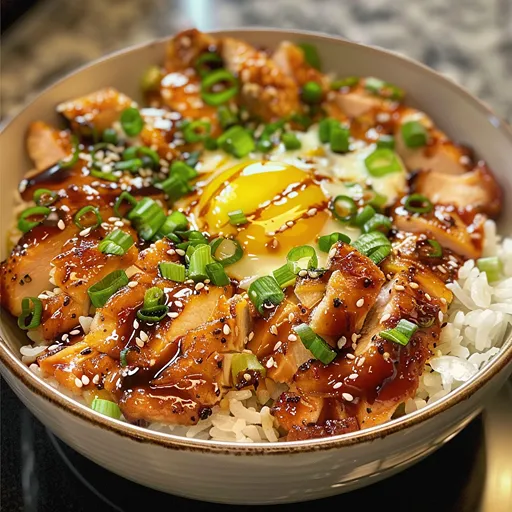
This teriyaki chicken and egg rice bowl is built for busy nights: juicy pan-seared chicken thighs coated in a sticky homemade teriyaki glaze, a runny-yolk egg on top, and warm rice underneath. When you break the yolk, it runs into the sauce and turns it creamy. Each bowl has about 45 grams of protein, the sauce is made from a few pantry ingredients, and everything cooks in one skillet in about 30 minutes.
Why You’ll Love This Recipe
- High in protein. About 45g per bowl from chicken thighs and an egg, with no powders or special products.
- Easy homemade teriyaki. Just soy sauce, mirin, brown sugar, and water. No bottled sauce needed.
- One pan. Chicken and egg cook in the same skillet, so cleanup is quick.
- Great for meal prep. The chicken and rice keep well. Cook the egg fresh when you eat.
What Is a Teriyaki Chicken and Egg Rice Bowl?
It is a Japanese-style rice bowl (donburi) that combines two classics: glazed teriyaki chicken and a soft egg on rice. “Teriyaki” means the food is glazed and shiny. The sauce simmers until it thickens and coats the chicken, and the egg yolk adds richness on top.
Ingredients
Chicken
- 12.4 oz (350 g) boneless, skinless chicken thighs (about 2 large or 3 small)
- 1/4 teaspoon salt
- 1/4 teaspoon black pepper
- 1 teaspoon neutral oil (avocado or canola)
Teriyaki sauce
- 2 tablespoons soy sauce
- 2 tablespoons mirin
- 1 tablespoon brown sugar (or white sugar)
- 1 tablespoon water or sake
- 1 teaspoon cornstarch mixed with 1 teaspoon water (optional, for a thicker glaze)
Egg and serving
- 2 large eggs
- 1 teaspoon neutral oil
- 2 cups (about 320 g) warm cooked rice, short-grain or jasmine
- 1 green onion, thinly sliced
- 1 teaspoon sesame seeds
Ingredient Notes
- Chicken thighs: They stay juicy and take a glaze well. Skinless thighs keep the bowl high in protein and lower in fat.
- Mirin: A sweet Japanese rice wine that gives the sauce its shine. If you can’t find it, use 1 extra tablespoon of water and 1 extra teaspoon of sugar.
- Soy sauce: Low-sodium soy sauce gives you more control, since the sauce reduces and gets saltier.
- Cornstarch slurry: Optional, but it helps the sauce cling if your pan is too hot to reduce it slowly.
- Eggs: The fresher the egg, the better the white holds together when fried.
Instructions
- Prep. Pat the chicken dry with paper towels. Season both sides with the salt and pepper. In a small bowl, stir the soy sauce, mirin, brown sugar, and water until the sugar dissolves.
- Sear the chicken. Heat 1 teaspoon oil in a large skillet over medium-high heat. Add the chicken and cook without moving it for 4 to 5 minutes, until deep golden. Flip and cook 3 to 4 minutes more.
- Glaze. Lower the heat to medium. Pour in the sauce and cook for 1 to 2 minutes, turning the chicken, until the sauce thickens and coats it. If you use the cornstarch slurry, stir it in for the last 30 seconds. The chicken is done at 165°F (74°C) inside. Watch the pan closely, because the sugar can burn fast.
- Rest and slice. Move the chicken to a cutting board and rest for 3 minutes. Slice into thick pieces. Leave the sauce in the pan, adding 1 tablespoon of water if it is too thick to drizzle.
- Fry the eggs. Wipe the pan, or use a small nonstick pan. Heat 1 teaspoon oil over medium-low heat. Crack in the eggs and cook for 2 to 3 minutes, covering for the last 30 to 60 seconds so the whites set and the yolks stay runny.
- Assemble. Divide the rice between two bowls. Top with the sliced chicken, then a fried egg. Drizzle with the pan sauce, then add the green onion and sesame seeds.
Protein Breakdown (per bowl)
Based on 2 bowls, using raw chicken weight and large eggs:
- Chicken thighs, 175 g raw: about 34g
- Egg, 1 large: about 6g
- Cooked rice, 1 cup: about 4g
- Soy sauce and other: about 1.5g
- Total: about 46g, rounded down to ~45g
Want more protein? Add a second egg per bowl for about 6g more.
Tips for Success
- Pat the chicken dry. Dry meat browns better and gets those golden edges.
- Don’t move the chicken while it sears. Leave it alone for the full 4 to 5 minutes to build color.
- Lower the heat before adding the sauce. Sugar burns quickly in a hot pan.
- Let the chicken rest. Slicing right away lets the juices run out.
- Slice thick, not thin. Thick slices stay juicy and look better on the bowl.
- Cover the egg for the last minute. The steam sets the white on top while the yolk stays soft.
- Taste the sauce. Soy sauces vary in saltiness, so add a splash of water if it reduces too far.
Variations
- Skin-on thighs: Crispier and more flavorful, but slightly higher in fat and a little lower in protein per bowl.
- Chicken breast: About 5g more protein per bowl. Slice it into thick cutlets and cook only until 165°F (74°C) so it stays juicy.
- Extra eggs: Two eggs per bowl for about 6g more protein.
- Jammy egg: Swap the fried egg for a 7-minute soft-boiled egg, halved.
- Veggies: Add steamed broccoli, snow peas, or edamame on the side.
- Spicy: Drizzle chili crisp or sriracha over the top.
- Lower carb: Serve over cauliflower rice or half rice and half greens.
Storage and Make-Ahead
- Refrigerator: Keep the chicken and rice in separate airtight containers for up to 3 days, so the rice doesn’t soak up too much sauce.
- Reheat: Warm the chicken and rice in the microwave in short bursts, adding a splash of water to the sauce.
- Eggs: Cook them fresh. Fried eggs don’t reheat well.
- Freezer: Freeze the cooked chicken with its sauce for up to 2 months. Thaw in the fridge overnight.
- Safety note: A runny yolk is not fully cooked. If you are pregnant, serving young children, or have a weak immune system, cook the egg until firm.
Frequently Asked Questions
Is this teriyaki chicken and egg rice bowl healthy?
- It can be. It is high in protein, and you control the sugar and salt in the sauce. Use low-sodium soy sauce if you watch your salt.
How much protein is in each bowl?
- About 45g. This is an estimate based on 175 g of raw chicken thigh, 1 egg, and 1 cup of cooked rice per bowl.
Can I use chicken breast instead of thighs?
- Yes. It has a bit more protein, but it dries out faster, so don’t overcook it.
Can I make teriyaki sauce without mirin?
- Yes. Use 1 extra tablespoon of water and 1 extra teaspoon of sugar. The flavor is slightly less rounded but still good.
Why did my sauce burn?
- The heat was too high when the sauce went in. Lower the heat to medium and keep the chicken moving.
How do I get a runny yolk with a set white?
- Use medium-low heat and cover the pan for the last 30 to 60 seconds.
High-Protein Teriyaki Chicken and Egg Rice Bowl
Ingredients
Method
- Prep. Pat the chicken dry with paper towels. Season both sides with the salt and pepper. In a small bowl, stir the soy sauce, mirin, brown sugar, and water until the sugar dissolves.
- Sear the chicken. Heat 1 teaspoon oil in a large skillet over medium-high heat. Add the chicken and cook without moving it for 4 to 5 minutes, until deep golden. Flip and cook 3 to 4 minutes more.
- Glaze. Lower the heat to medium. Pour in the sauce and cook for 1 to 2 minutes, turning the chicken, until the sauce thickens and coats it. If you use the cornstarch slurry, stir it in for the last 30 seconds. The chicken is done at 165°F (74°C) inside. Watch the pan closely, because the sugar can burn fast.
- Rest and slice. Move the chicken to a cutting board and rest for 3 minutes. Slice into thick pieces. Leave the sauce in the pan, adding 1 tablespoon of water if it is too thick to drizzle.
- Fry the eggs. Wipe the pan, or use a small nonstick pan. Heat 1 teaspoon oil over medium-low heat. Crack in the eggs and cook for 2 to 3 minutes, covering for the last 30 to 60 seconds so the whites set and the yolks stay runny.
- Assemble. Divide the rice between two bowls. Top with the sliced chicken, then a fried egg. Drizzle with the pan sauce, then add the green onion and sesame seeds.
Notes
- Pat the chicken dry. Dry meat browns better and gets those golden edges.
- Don’t move the chicken while it sears. Leave it alone for the full 4 to 5 minutes to build color.
- Lower the heat before adding the sauce. Sugar burns quickly in a hot pan.
- Let the chicken rest. Slicing right away lets the juices run out.
- Slice thick, not thin. Thick slices stay juicy and look better on the bowl.
- Cover the egg for the last minute. The steam sets the white on top while the yolk stays soft.
- Taste the sauce. Soy sauces vary in saltiness, so add a splash of water if it reduces too far.